

Churches stepping in as inflation hurts families
“Driving through our neighbourhoods, you would not expect to see many people needing to use a food bank.”
Craig Macartney
Spur Ottawa Writer
Inflation. For two years the media has talked about rising costs, what to expect, and whether or not this is transitory. For Ottawa’s food banks, the human toll hits far closer to home.
“Prior to the pandemic, our food bank was serving about 220 families a month. Right away, in March, we saw a huge uptake. We were serving about 535 families at the beginning, and through the pandemic we have seen consistent growth,” says Lisa Fabian, executive director of Care Centre Ottawa, which operates out of Bethel Church. “This past December, we saw approximate 850 families.”
The Ottawa Food Bank would not provide any comments or statistics about the increase of food bank services across the city, but the church-facilitated food banks Spur Ottawa reached all had similar stories.
Lifecentre Food Bank served 12 new families just last month, with a total of 413 monthly neighbours served.
“We have seen a significant increase in the number of seniors using our services since the beginning of the pandemic.”
Community Compassion Centre Food Bank is still fairly new. Also located in Orleans, they opened six months before the pandemic hit, when the Ottawa Food Bank asked Community Pentecostal Church to help fill a need in neighbourhoods around the K1C area code.
“Driving through our neighbourhoods, you would not expect to see many people needing to use a food bank, but there have been many challenges people have had to deal with over the last little while,” says Marlene Tosh, the centre’s director. “The numbers just keep coming. Since September [2021], we have had new families—two, three, or four new families—come every day we have been open.”
When they opened, in September 2019, they expected about 200 families a month. Tosh says God gave them six months to figure out how to run the food bank. Once the pandemic and restrictions hit, their numbers shot up. In 2020, they served 1,035 families, totally 2,849 neighbours. Last year their numbers climbed 10 percent more, to 1,162 families and 3,540 neighbours.
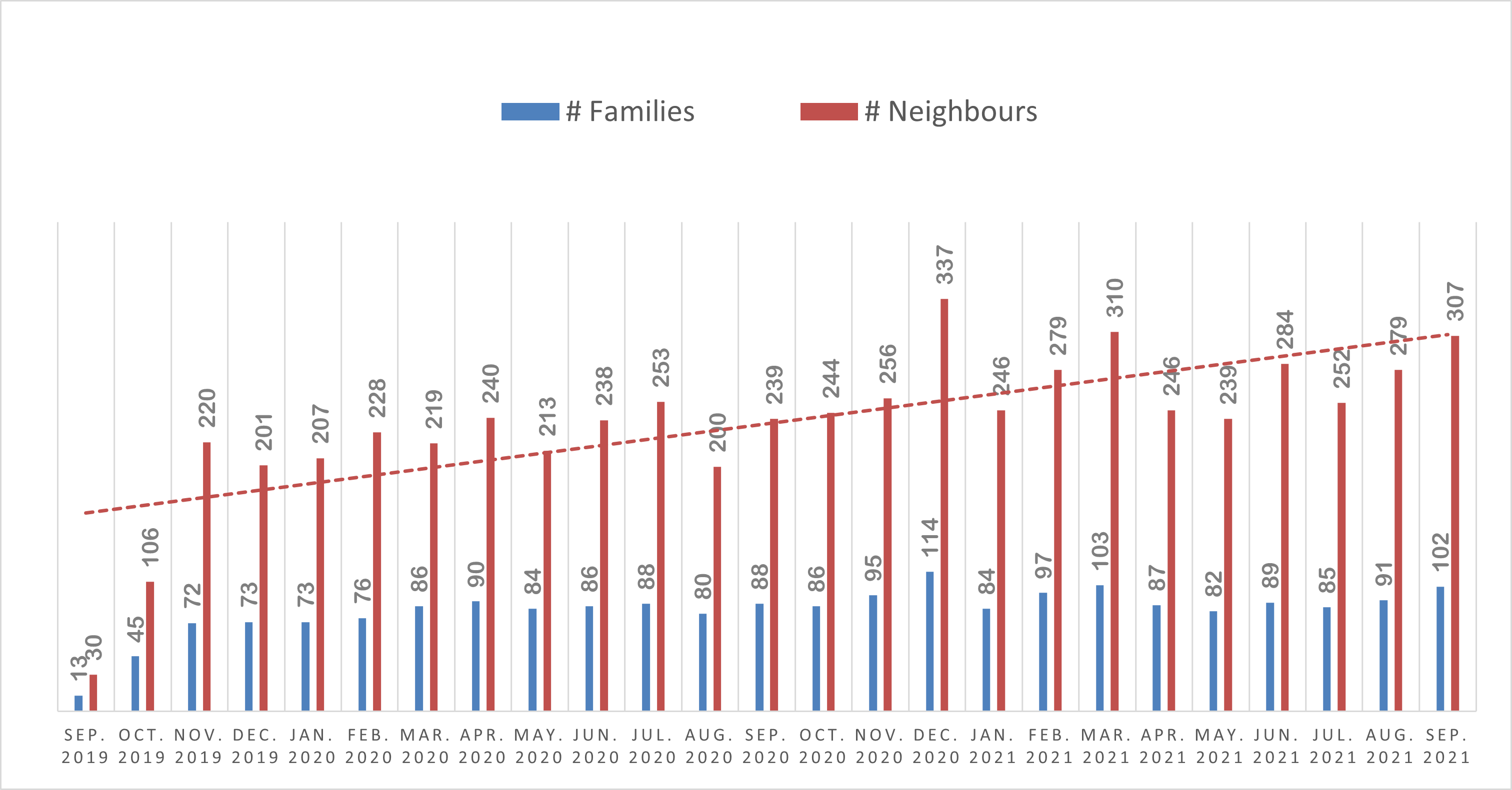
“The growth is obvious. In running a foodbank your goal is not to see the numbers increase but rather to have your families get back on their feet and be able to function independently,” Tosh says. Image courtesy of Community Compassion Centre Food Bank.
“We have newcomers to Canada coming, and that’s to be expected. We also have people who our children go to school with. It’s not uncommon for people to call the food bank and say, ‘I’ve never had to do this before.’”
Care Centre Ottawa’s guests are equally diverse, from families on social assistance and single-parent families, to working families that cannot keep up with bills.
“We have seen a significant increase in the number of seniors using our services since the beginning of the pandemic,” Fabian states. “We often hear people talking about that perfect storm right now, of inflation, housing costs, and the strain that the pandemic has placed on families.”
This storm put extra strain on the food banks, themselves, as food donations decreased. Tosh says members of Community Pentecostal Church were key, many of them providing monthly support to the food bank. Similarly, Fabian says churches are well positioned to shine light into these struggles.
“Our church community and partners in the community have all come around and helped us out. Those relationships have been really important.”
“The way we have coped—and this speaks to how the Church can make a difference in the community—is we had those strong, trusting relationships with people in our neighbourhood prior to the pandemic. Our church community and partners in the community have all come around and helped us out. Those relationships have been really important.”
It is likely food banks will continue to see high numbers of families needing help for some time. Fabian says the best way believers can help is by really getting to know their neighbours and local foodbank.
“We have an ongoing need, always, for things like, personal care items. Our guests often ask for more things like dish soap, laundry soap, and all these sorts of things. So, by getting to know the folks at your local food bank and asking about specific needs, you can be more effective in what you collect.”
Similar Articles

Working toward their future
Overcoming employment barriers is a key step to help street-engaged youth turn their lives around. Ottawa Innercity Ministries (OIM) launched a youth internship program to do just that. Started in January 2021 as an outflow of OIM’s Youth Art Program, the […]

Project Sword offers a first response to first responders
They are expected to be the strongest in society; well trained and dedicated, serving and protecting, immune to the everyday dysfunction and tragedy that they protect against. Sadly, Canada’s law-enforcement community is facing a desperate crisis […]

Camp Kairos rallies youth ministries
Youth and young adult ministries often wind down over the summer, but a group of local youth leaders are finalizing plans for a new summer camp that aims to stir up the faith of young believers and impart a passion for revival […]

Christian Counselling Ottawa launches teen support group
With the new school year started, many youth are still trying to process the emotional impact of the past two years of restrictions. Not sure where to turn or who to turn to, many are left feeling confused, anxious, and alone. “Teens need […]

The Compassion Experience comes to Ottawa
The room is dim; a dirty concrete floor with cold cinderblock walls imposing on three sides. The only light shines through the thick steel bars. It feels so real, just like the Nairobi prison where 9-year-old Jey was held, but a child’s voice reminds you that this is a story of hope. “That’s when […]

Ottawa’s post-COVID Church—what does it look like?
As society looks toward a post-pandemic world, Ottawa churches are beginning to reflect on the past two years and evaluate the lessons. To help understand the big picture of the Church in this city, Spur Ottawa connected with six pastors about their church’s challenges and take-aways […]
